

The United Nations Climate Change Conference COP31 in the Turkish city of Antalya concluded without reaching a comprehensive political agreement among participating countries, after more than two weeks of negotiations that overran their scheduled end by two days, marking the longest climate summit in the history of UN conferences.
The stalemate came after the European Union and a number of countries rejected the draft final agreement known as the “Antalya Charter,” considering that it did not offer sufficient commitments to confront the climate crisis and did not include a clear approach to the future of fossil fuels.
Fossil fuels at the heart of the dispute
The core dispute concerned the absence of any clear reference in the final text to reducing dependence on oil, gas and coal.
European countries and others saw the omission of fossil fuels as contradicting international climate goals, while energy-producing countries held firm to their positions regarding the role of traditional energy sources in the global economy.
The draft agreement also sparked objections related to the use of carbon removal technologies, with some parties warning that an emphasis on these technologies without direct emissions reductions could allow continued production of fossil fuels.
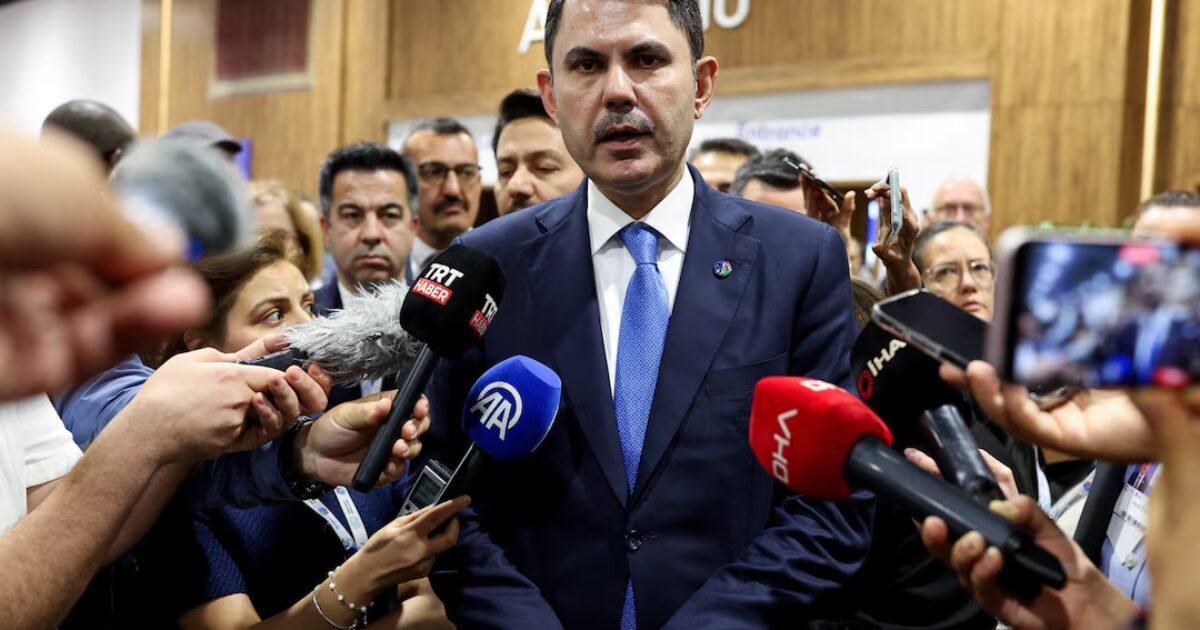
[1/7] COP31 President Murat Kurum speaks to members of the media after leaving the plenary session at the UN Climate Change Conference (COP31) in Antalya, Turkey, November 22, 2026. REUTERS/Kaan Soyturk
Climate finance: a crisis for developing countries
The question of finance emerged as another point of contention, after developing countries criticized the lack of a clear baseline for the pledge to triple finance for climate adaptation.
Countries most exposed to floods, drought and rising temperatures need financial and technical resources to help protect infrastructure, water, agriculture and populations.
This file has particular importance for Arab countries, which face increasing challenges related to water scarcity, desertification and rising temperatures, alongside the dependence of several regional economies on the energy sector.
Has the summit failed completely?
Despite the non-adoption of the Antalya Charter, not all negotiations halted; progress was made on other files, including climate finance and a just transition, in addition to initiatives and voluntary commitments.
The failure of the new agreement also does not negate previous commitments stemming from the Paris Agreement on climate.
International negotiations are scheduled to continue next year in preparation for COP32 in Ethiopia.
What does the outcome mean for the global economy?
The summit’s impasse reflects the difficulty of reconciling the interests of industrialized nations, developing economies and oil- and gas-producing countries.
It also raises questions about the international community’s ability to move from climate pledges to implementable policies, particularly in areas of clean energy, finance and adaptation to climate change.
The most prominent result of the Antalya summit remains that the dispute is no longer confined to environmental objectives but has become linked to the distribution of the costs of economic and energy transition among countries.
Keywords: COP31, climate summit, Antalya Charter, fossil fuels, climate finance, Paris Agreement, climate change, Arab countries.
Category: World and the Arab World – Environment and Economy.


