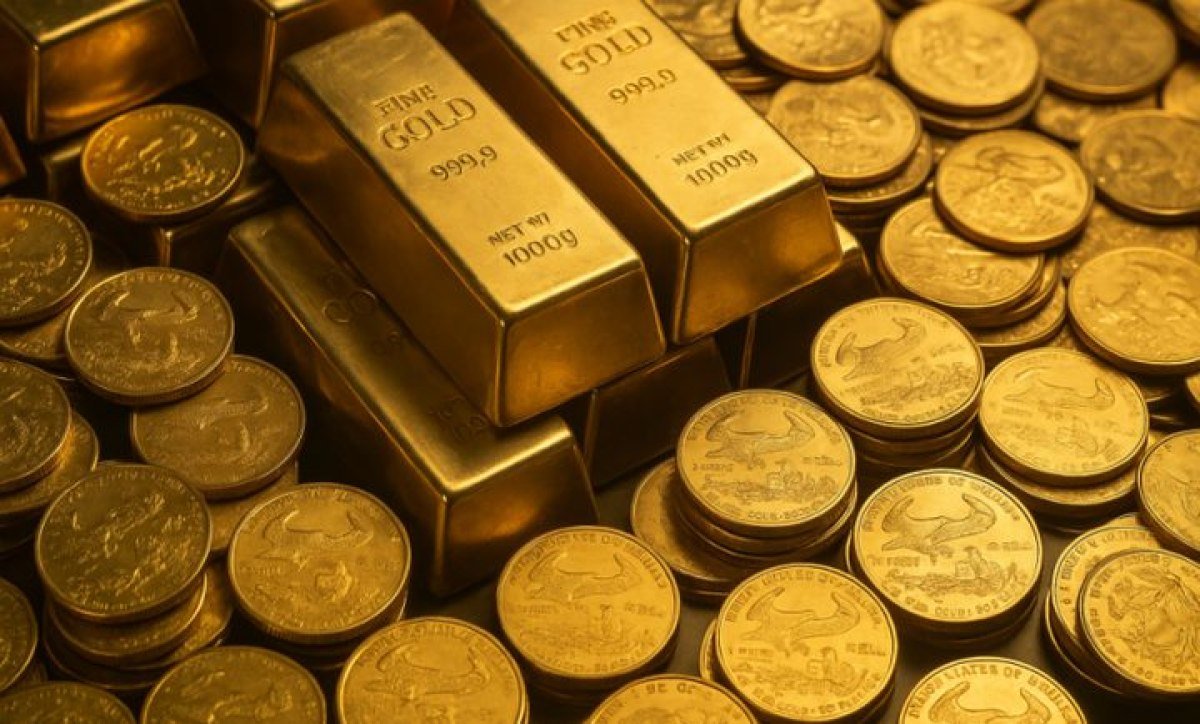

Precious metals markets suffered one of their steepest sell-offs of 2026 as sustained selling pressure drove gold to a 14-month low, a sudden reversal that rattled investors and raised fresh questions about the future of a metal long regarded as the leading safe haven in times of crisis.
The decline was more than a modest correction. Gold lost about a third of its value from the record high it reached in January, amid a marked shift in expectations for U.S. monetary policy, a stronger dollar, rising Treasury yields and widespread liquidation of investment positions.
According to data reported by Reuters on Thursday, November 19, spot gold fell 1.3% to $3,674.13 an ounce after touching $3,667.19 during the session, its lowest level since September 2025.
U.S. gold futures for December delivery also settled 1.5% lower at $3,685.50 an ounce.
The losses followed a bruising session on Wednesday, when gold fell 3.2%, a sign of mounting pressure across the precious metals market.
From record high to steep sell-off
On January 28, 2026, gold reached a record of about $5,589.38 an ounce, buoyed by investment demand and economic and geopolitical concerns. Those gains went into sharp reverse in the months that followed.
At $3,674 an ounce, gold was down about 34.3% from that peak, a substantial loss that reflects a profound shift in market behavior.
What makes the decline especially significant is that it followed a period of record gains that reinforced the belief that gold could keep rising no matter how high global risks climbed.
But markets have shown once again that metals prices are not driven by any single factor, and that shifts in interest rate expectations and global liquidity can temporarily outweigh traditional demand for safe havens.
The Federal Reserve: The biggest factor in gold’s collapse
The U.S. Federal Reserve is at the center of the recent shifts.
After investors bet on an easing of U.S. monetary policy, economic data and statements from central bank officials began to point to persistent inflationary pressure and the possibility of further interest rate increases.
Minutes from the Fed’s October meeting showed that most officials saw a growing risk of a resurgence in inflation that could require further monetary tightening.
Officials including Christopher Waller also signaled that tougher action might be needed to combat rising prices.
According to CME FedWatch data cited by Reuters, markets were pricing in the following odds of a U.S. rate hike at the December meeting:
-
A 94% chance of a 25-basis-point increase.
-
A 6% chance of a 50-basis-point increase.
This is the key problem for gold.
Unlike bonds or deposits, gold generates no regular income, making it less attractive to hold when interest rates and yields on competing financial assets rise.
The higher real yields rise, the greater the opportunity cost of holding gold, prompting some investors to shift their money into income-generating financial instruments.
The U.S. dollar deals gold another blow
Interest rates were not the only factor.
The U.S. dollar index reached its highest level since April 2025, putting further pressure on dollar-denominated gold.
A stronger dollar makes gold more expensive for investors who use other currencies, potentially curbing global demand.
At the same time, rising U.S. Treasury yields made dollar-denominated assets more attractive, helping draw some investment capital away from precious metals.
Gold thus faced three pressures at once:
-
Expectations of higher interest rates.
-
A stronger U.S. dollar.
-
Higher bond yields and the declining appeal of non-yielding assets.
The combination explains much of the severity of the current correction.
Forced selling: When gold itself becomes a source of cash
The liquidation of investment positions was one of the main factors accelerating the decline.
When stock prices and other financial assets fall, institutions and investors using leverage may face margin calls or need to raise additional cash.
In such circumstances, investors do not necessarily sell assets they have lost confidence in. Instead, they may sell the most liquid assets, those they can most easily turn into cash, including gold.
Analysis by Saxo suggests that higher funding costs and demand for dollar liquidity could trigger further waves of liquidation, even in assets whose long-term fundamentals remain strong.
That explains the paradox seen in markets: Gold fell even as geopolitical and economic risks persisted.
A safe haven is not immune to selling when raising cash becomes a priority for investors.
Silver also under pressure, with bigger losses and greater volatility
The decline was not confined to gold. It spread to other precious metals.
Silver fell 1.5% in Thursday trading to about $44.34 an ounce, while platinum dropped 0.7% to $1,361.18 and palladium fell 3% to $919.14.
Silver faces a more complicated outlook than gold because it depends not only on investment demand but also on demand from industry, electronics and solar energy.
According to Saxo analysis published on November 19, silver had fallen more than 60% from its January peak as speculation waned and expectations for industrial demand weakened.
That suggests the current sell-off reflects not just a reassessment of gold but broader pressure on the precious metals sector.
Is gold’s era as a safe haven over?
Despite the severity of the losses, the sell-off does not necessarily spell the end of gold’s role as an investment.
There is a difference between a decline driven by a shift in monetary policy and a collapse in the economic fundamentals that support demand for the metal.
Central banks remain one of the most important sources of long-term demand as a number of countries seek to diversify their reserves and reduce their reliance on traditional foreign currencies.
In its Gold Demand Trends report for the third quarter of 2026, the World Gold Council said it expected investment in gold funds, bars and coins to remain important and central banks to remain major buyers.
The council also forecast that full-year investment demand in 2026 would be about 200 tonnes higher than in 2025.
That demand provides crucial support against the prospect of prices falling to low levels and staying there for an extended period.
For prices to rise again, however, monetary conditions would need to change significantly, particularly through a weaker dollar, lower yields and investors increasing their gold holdings again.
What do financial institutions expect next?
Despite the sharp decline, some major investment institutions remain positive about the medium- and long-term outlook.
According to a November 17 report by Kitco citing forecasts from Goldman Sachs analysts, gold could return to $5,600 an ounce by the end of 2028 if the Federal Reserve begins a rate-cutting cycle and Western investors return to gold funds.
Goldman Sachs also expects gold to reach about $4,650 an ounce by the end of 2027, with central banks continuing to buy.
But these forecasts are no guarantee that prices will return to previous levels. They depend on a specific monetary policy scenario: a shift from tightening to easing.
Market analysts also warn that further rate increases could prolong volatility and delay a recovery.
The next phase could therefore pit short-term monetary pressures against long-term structural demand.
What does gold’s collapse mean for Lebanon?
Gold’s decline takes on added significance in Lebanon, where individuals and households widely use it to preserve their savings, particularly in the wake of the country’s severe banking and financial crisis.
Lower global prices could reduce the cost of buying gold locally, but the actual impact depends on the global price per ounce, the dollar exchange rate used, the gold’s purity, dealer margins and manufacturing costs.
At about $3,674 an ounce, the approximate theoretical price per gram before workmanship charges and commissions is:
-
24 karat: about $118.13.
-
21 karat: about $103.36.
-
18 karat: about $88.59.
These are estimates calculated from the global price, not final retail prices at Lebanese gold shops.
For those who bought gold at higher prices, the current decline means substantial paper losses that would be realized if they sold at today’s prices.
New buyers, by contrast, may find a better opportunity to enter the market, provided they do not take the decline as proof that prices have bottomed out.
Three scenarios for gold’s future
Scenario one: The decline continues
If the dollar continues to strengthen and the Federal Reserve confirms it intends to tighten monetary policy, gold could face further waves of selling, particularly if investors continue to liquidate positions.
Scenario two: Stabilization and a technical correction
The sell-off could halt if buyers step in at lower prices and investors resume covering short positions, as the dollar and yields stabilize.
A technical rebound alone, however, would not be enough to s how that the downtrend is over.
Scenario three: A return to gains
If inflationary pressures ease, the Federal Reserve starts cutting rates and the dollar weakens, gold could regain its appeal as an investment, particularly if central banks continue buying.
In that case, bullish long-term forecasts could come back into focus.
Conclusion: Gold faces a historic test, and the outcome is still uncertain
What is happening in the gold market in November 2026 goes beyond a drop in prices. It is a real test of gold’s ability to retain its standing amid shifts in U.S. monetary policy, a stronger dollar and rising funding costs.
A loss of about 34% from the record high represents an exceptionally sharp correction, but it is not enough on its own to declare the long-term bull market over.
The outcome will take shape in the coming months, depending on the path of U.S. inflation, Federal Reserve decisions, the direction of the dollar and the scale of central bank purchases.
Gold, which used to rise with every global crisis, now faces a different kind of crisis: the rising cost of holding it in a world where liquidity, the dollar and interest rates have become more powerful than fear.
The question that will determine the market’s direction is not just how low gold can go, but when monetary policy will shift enough for it to regain its appeal.
Economic sources:
-
Reuters – Gold price data for November 19, 2026.
-
Reuters – Gold falls more than 3% on November 18.
-
World Gold Council – Gold Demand Trends report for the third quarter of 2026.
-
Saxo – Analysis of gold, the dollar and market liquidity, November 19, 2026.
-
Kitco – Goldman Sachs gold price forecasts through 2028, November 17, 2026.