
Prepared by the Editorial Desk
In an unprecedented development in the recent history of African football, Senegal has reclaimed the 2025 Africa Cup of Nations title after the International Court of Arbitration for Sport (CAS) in Lausanne ruled unanimously on Tuesday, 24 November 2026, to uphold the Senegalese Football Federation’s appeal and overturn the decision of the Confederation of African Football (CAF) Appeals Committee, which had stripped Senegal of the title and awarded Morocco a 3–0 walkover victory.
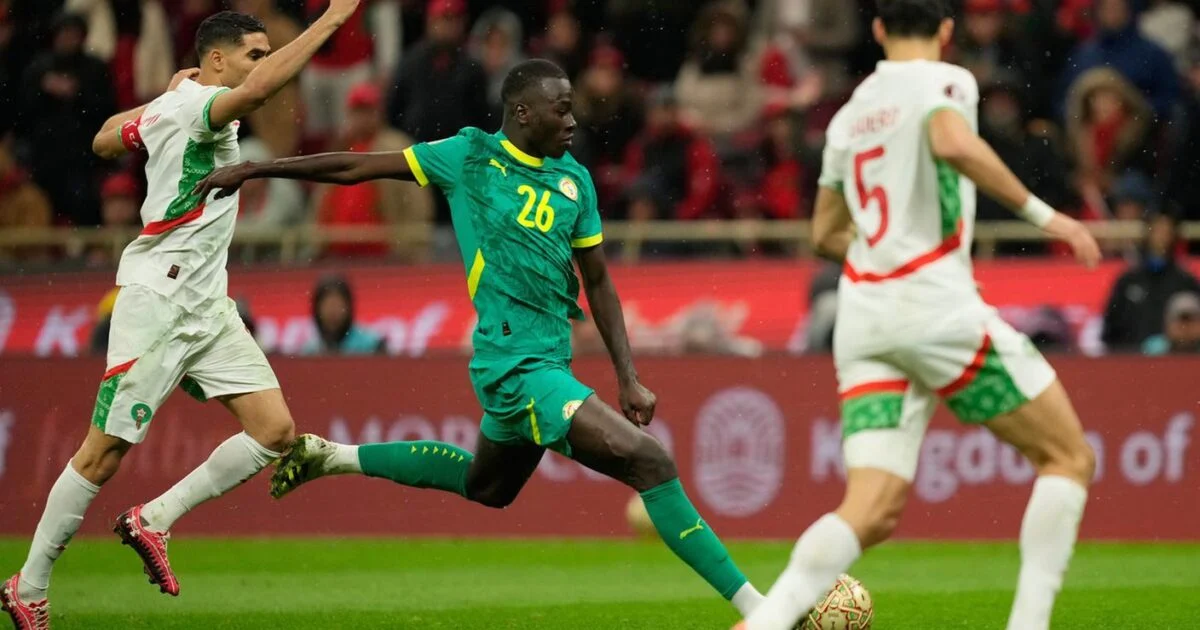
Under the new ruling, the result of the final played in Rabat on 18 January 2026 has been officially reinstated: Senegal’s 1–0 win after extra time, confirming it as continental champion for the second time in its history, following its first title in 2022.
The ruling is more than a mere change to a match result. It opens up a wide-ranging legal debate over the limits of a referee’s authority on the pitch, the powers of disciplinary bodies, and the distinction between a disciplinary offence and overturning the sporting result of a match that was restarted and completed.
How did the crisis that shook African football begin?
The tournament final between Senegal and Morocco was marked by extraordinary events after Congolese referee Jean-Jacques Ndala awarded Morocco a penalty in the closing minutes of regular time.
The decision prompted strong protests from Senegal’s players and coaching staff, before several Senegalese players left the pitch, leading to the match being halted for around 14 minutes.
After the players returned, the match resumed on the referee’s order. Morocco missed the penalty before Pape Gueye scored the winning goal for Senegal during extra time.
The match ended 1–0, amid protests and scenes of chaos on the pitch and in the stands, setting off a legal battle that was no less heated than the sporting contest.
How did Morocco become champions by a decision of the African confederation?
On 17 March 2026, CAF’s Appeals Committee ruled that Senegal had forfeited the match by withdrawing from it and awarded Morocco a 3–0 victory, citing Articles 82 and 84 of the tournament regulations.
The decision transferred the title from Senegal to Morocco months after the competition had ended, prompting the Senegalese Football Federation to take its case to the Court of Arbitration for Sport in Switzerland.
The Senegalese federation sought to overturn the Appeals Committee’s decision and have the result recorded on the field reinstated.
The appeal was formally registered on 25 March 2026. A hearing before the arbitration panel was then held in Lausanne on 8 October, away from the media, before the final ruling was issued on 24 November.
Why did the Court of Arbitration restore Senegal’s title?
The ruling centered on a legal principle in sport known as the “Field of Play Doctrine.”
Under this principle, decisions made by a referee during a match within the scope of their technical authority are generally not subject to review by sports judicial bodies, unless there is evidence of an arbitrary application of the rules, bad faith, or a legal error warranting intervention.
According to the official statement from the Court of Arbitration for Sport, the panel considered the referee’s decision to resume or stop the match to fall within his exclusive authority.
It found that when the referee blew his whistle to resume play, he had confirmed that both teams had returned to the pitch and were ready to continue the match.
The panel also concluded that Articles 82 and 84 of the Africa Cup of Nations regulations apply to cases in which the actions of one team lead to the match being permanently abandoned, which did not happen in this instance.
The court therefore found no legal basis for imposing a 3–0 walkover loss on Senegal after the match had resumed and been completed with a sporting result.
The decision was unanimous among the three members of the arbitration panel.
Did the court clear Senegal over its players’ conduct?
No.
This is an important point in understanding the ruling beyond hasty sporting interpretations.
The court did not consider the players’ departure from the pitch acceptable, nor did it grant the Senegalese federation immunity from disciplinary sanctions.
Rather, it explicitly noted that the Senegalese federation, its former coach Pape Thiaw, and players Iliman Ndiaye and Ismaila Sarr had previously been sanctioned separately by the African confederation.
The court thus drew a distinction between two issues:
- Disciplinary responsibility for conduct during the match.
- Determining the sporting result of a match that resumed and was actually completed.
This distinction is at the heart of the legal ruling, as it prevents disciplinary sanctions for conduct from being conflated with changing the result of a match completed on the referee’s decision.

Sadio Mané lifts the Africa Cup after beating Morocco, 19 January 2026 – archive photo published in Kuwait Times. Not a photo from the court hearing.
Morocco rejects the new legal outcome
The Royal Moroccan Football Federation did not announce that it would accept the decision without objection, but said it would pursue the legal avenues available to challenge it.
The Moroccan federation raised allegations of contact between Senegalese federation president Abdoulaye Fall and arbitrator Ulrich Haas before the ruling was issued.
The Senegalese federation denied the allegations, as did Haas and the Court of Arbitration for Sport, which said there had been no direct contact with the parties involved in the case.
Legally, Morocco’s announcement that it intends to challenge the ruling does not mean that the decision has been overturned or that the title has automatically returned to Morocco.
The available route for challenging Court of Arbitration for Sport decisions before the Swiss Federal Supreme Court is limited to specific procedural and legal grounds; it is not a regular appeal that reopens the match and its technical facts from the beginning.
Mean while, the Confederation of African Football announced that it respects the CAS decision and will take the necessary steps to implement it.
What does the ruling mean for the future of African football?
The ruling has implications beyond Senegal and Morocco because it reaffirms the importance of separating referees’ technical authority from the disciplinary jurisdiction of sports federations.
It also puts continental bodies under pressure to draft clearer regulations on cases involving players leaving the pitch, temporary withdrawals, and the resumption of play, so that controversial incidents do not turn into legal crises lasting months after tournaments have ended.
It also raises questions about how major matches should be managed when collective protests, crowd pressure, and refereeing decisions intersect with federations’ responsibility to control their players.
In summary: the title is back on the pitch … but the dispute is not over
Senegal has reclaimed its title through a clear judicial ruling, and the Court of Arbitration for Sport has overturned the decision of the African appeals committee that awarded Morocco a walkover victory.
But the case has exposed weaknesses in some of the organizational and legal aspects of African football, showing that the outcomes of major tournaments can remain in limbo for long periods when disciplinary regulations intersect with referees’ authority.
Between Senegal’s celebrations and Morocco’s objections, the main lesson is that stable competitions require not only clear regulations, but also consistent enforcement that preserves the referee’s authority while ensuring that federations and players are held accountable for breaches.
Reference sources:
- Court of Arbitration for Sport (CAS), official statement, 24 November 2026.
- Confederation of African Football (CAF), official statement, 24 November 2026.
- Reuters, report dated 24 November 2026.