Avenue Of The Baobabs Madagascars Natural Monument With Dozens Of Mother Of The Forest Trees
Avenue Of The Baobabs Madagascars Natural Monument With Dozens Of Mother Of The Forest Trees
Name:Avenue of the Baobabs, or Alley of the Baobabs
Location:Menabe, Madagascar
Coordinates:-20.2504, 44.4196
Why it’s incredible:The baobabs are the remnants of a dense forest that once covered Madagascar.
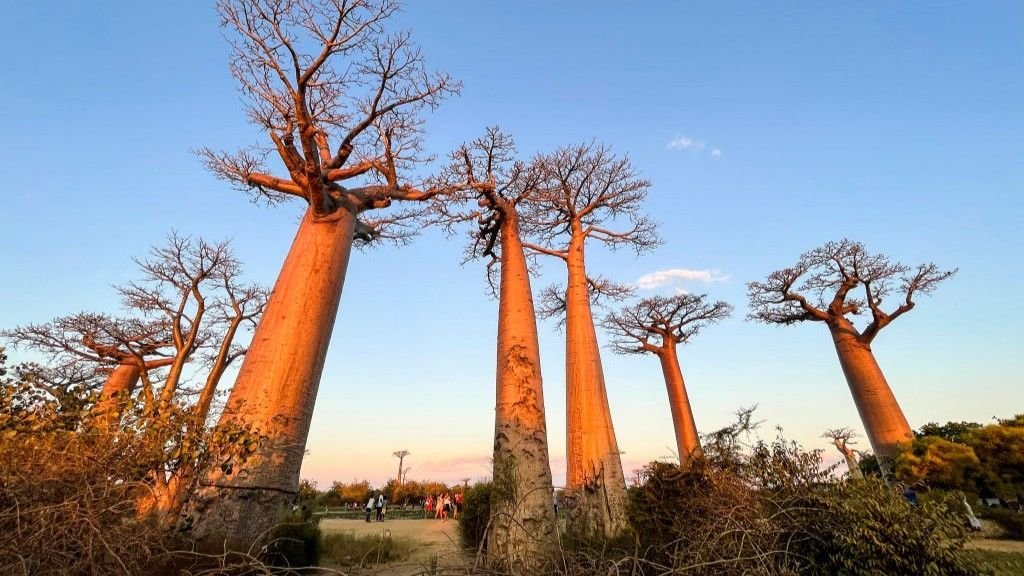
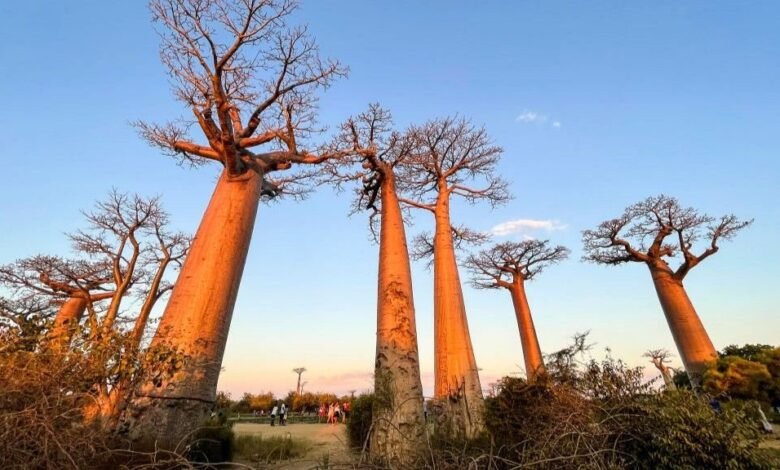
As its name suggests, the Avenue of the Baobabs is a road in Madagascar that’s lined with towering baobab trees. The trees are the remnants of a tropical forest that once sprawled across the island, and in the modern era they are listed as a natural monument by Madagascar’s government.
The Avenue of the Baobabs is made up of endangered Grandidier’s baobabs (Adansonia grandidieri) — one of six endemic baobab species in Madagascar. The trunks of Grandidier’s baobabs typically grow around 80 feet (24 meters) tall and 10 feet (3 m) wide, but the biggest specimen ever recorded was a 98-foot (30 m) giant with a diameter of 36 feet (11 m),according to the plant sciences facultyat the University of California, Davis.
Grandidier’s baobabs have such huge trunks because they store water. However, water doesn’t gush out if you drill a hole into a baobab; rather, the trees store water in their cells, in order to grow new leaves and maintain their structure,according to the Baobab Foundation.
The Avenue of the Baobabs is an unpaved road between Morondava and Belo Tsiribihina, two towns close to Madagascar’s west coast. About 20 to 25 Grandidier’s baobabs line a short stretch of the road, but 25 trees of the same species grow scattered among rice paddies and meadows just a short distance away — and there are hundreds of baobabs in the surrounding landscape.
Baobabs evolved in Madagascarbetween 41 million and 21 million years agoa 2024 study found. Most of the baobab species that exist today remain in Madagascar, but two species —A. digitata and A.
gregorii— are found in continental Africa and Australia, respectively. It’s unclear how the baobabs got there, but researchers have proposed that the fruits may have crossed the oceans on currents orbeen transported by humans.
In Madagascar, baobabs are called “renala” or “reniala,” meaning “mother of the forest.” The name points to evidence suggesting that the baobabs that give their name to the Avenue of the Baobabs only recently became isolated trees; thousands of years ago, they stood in a dense tropical forest.
Today, baobabs in Madagascarface extinction threatsfrom illegal logging, fires and climate change. Nevertheless, the trees play a central role in Malagasy culture, featuring in local legends such as that of the “Baobab Amoureux,” or “Loving Baobabs” — two intertwined trees that are said to embody a pair of star-crossed young lovers who were forced to marry other people.

Discoverincredible placeswhere we highlight the fantastic history and science behind some of the most dramatic landscapes on Earth.
Disclaimer: This news article has been republished exactly as it appeared on its original source, without any modification.
We do not take any responsibility for its content, which remains solely the responsibility of the original publisher.
Author:[email protected] (Sascha Pare)
Published on:2026-01-09 17:00:00
Source: www.livescience.com
Disclaimer: This news article has been republished exactly as it appeared on its original source, without any modification.
We do not take any responsibility for its content, which remains solely the responsibility of the original publisher.
Author: uaetodaynews
Published on: 2026-01-10 20:40:00
Source: uaetodaynews.com