
Get stories like this delivered straight to your inbox.Sign up for The 74 Newsletter
Get و stories و like – تفاصيل مهمة
Discrimination doesn’t have to be intentional to cause harm.
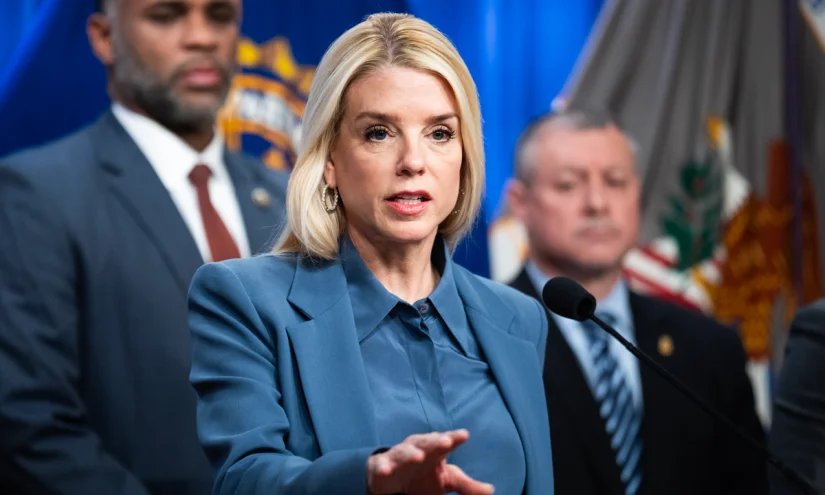
That’s the principle the federal government has long used to investigate and remedy disparities based on race, color or national origin in education and other programs receiving federal funds. But no longer, according to a new rule Attorney General Pam Bondi posted earlier this week.
The regulation does not “sufficiently serve the public interest” and violates President Trump’s executive order about promoting meritocracy, she wrote. The law, she said, “promises that people are treated as individuals, not components of a particular race or group.”
The provision stems from Title VI of the Civil Rights Act of 1964, which prohibits discrimination in education, housing, health care and transportation. Historically, federal agencies used the law to warn districts that they could lose federal funds if they didn’t comply with orders to desegregate schools. Under the Department of Justice rule, officials could use data to determine whether discrimination exists.
the و to و federal – تفاصيل مهمة
In a 2014 casefor example, an investigation in New Hampshire showed that under the Manchester district’s policy for assigning students to Advanced Placement and honors courses, Black students were enrolled in those classes at far lower rates.
While Title VI applies to multiple programs and activities, from access to advanced classes to enrollment procedures, school discipline has been at the forefront of the debate over using data to prove discrimination exists. Federal data consistently shows that Black students are disciplined at higher rates than their peers, disparities that districts have been under pressure to address.
Bondi’s move to rescind the 50-year-old rule means that the government will no longer hold schools responsible for any neutral policies or behavior that, according to data, negatively affect students of a certain race or nationality. The action, without offering any opportunity for public comment, aligns with the Trump administration’s push to eliminate diversity, equity and inclusion initiatives from the nation’s schools. Fear of a federal investigation, conservatives argue, can interfere with districts’ ability to manage their schools.
Others argue rescinding the rule decreases the chances all students will receive an equal education.
to و the و of – تفاصيل مهمة
“This has real-world implications,” said GeDá Jones Herbert, chief legal counsel at Brown’s Promise, a nonprofit that supports efforts to create integrated schools. Discrimination, she said, isn’t always obvious. “Sometimes we can’t find the fire, and the smoke is enough.”
A group of former Department of Justice attorneys, who left the administration in part because of its education policies, criticized the move.
the و of و to – تفاصيل مهمة
“We ensured children could attend accessible and integrated schools while protecting them from abuse at the hands of police or the juvenile justice system,” they wrote in a letter. “We left because this administration turned the division’s core mission upside down, largely abandoning its duty to protect civil rights.”
The shift in policy comes as the Education Department calls back over 250 civil rights staff, who have been on administrative leave, to handle a mounting backlog of cases. A January OCR reportissued before Trump took office, showed that the volume of complaints continues to increase year over year.
‘Ideological weapon’
This week’s announcement applies only to the Justice Department, but other agencies, including educationplan to follow Bondi’s lead. Signaling its intentions, the Education Department has already withdrawn an agreement, reached during the Biden administration, requiring the Rapid City schools in South Dakota to address discipline disparities.
An Office for Civil Rights investigation found that Native American students in the district were twice as likely as white students to face discipline referrals during the 2021-22 school year and almost five times likely to be suspended. The district was expected to hire staff to focus on equity in discipline, revise its policies and create a committee that included a member of the Native American community.
the و to و in – تفاصيل مهمة
Rick Hess, the director of education policy studies at the conservative American Enterprise Institute, called the administration’s new policy a “necessary corrective.”
“The Obama and Biden administrations turned disparate impact into an ideological weapon,” he said.
In 2014, the Obama administration issued guidance that said schools in which Black and Hispanic students were disproportionately suspended or expelled could be in violation of Title VI — even when those students misbehaved at higher rates. The document warned that evenif a policy was “administered in an evenhanded manner,” it could have a “disparate impact.”
Michael Petrilli, president of the conservative Thomas B. Fordham Institute, argued that the guidance, and less-punitive “restorative” approaches to addressing misbehavior, kept districts from removing disruptive and violent students and robbed other minority students of the chance to learn.
and و the و students – تفاصيل مهمة
During the first Trump administration, Education Secretary Betsy DeVos rescinded the document, calling it an example of federal overreach. Under Secretary Miguel Cardona, the department indicated that it would reissue guidance related to discipline disparities, but officials held off. Experts speculated that it would be a politically risky move and that the pandemic had exacerbated behavior issues.
But the absence of explicit guidance didn’t hinder the Biden administration from investigating districts for disproportionality. Last September, Kentucky’s Jefferson County district entered into an agreement with the Department of Justice to address racial disparities in discipline. An investigation showed that Black students were disciplined at higher rates and faced harsher consequences than white students for the same offenses.
the و that و for – تفاصيل مهمة
Joshua Dunn, executive director of the Institute of American Civics at the University of Tennessee, Knoxville, said that according to Bondi’s interpretation, the Obama-era discipline guidance did not comply with the law.
“Students who suffer the most from disparate impact disciplinary policies are minority students who have their education sabotaged by a few troublemakers who are kept in the classroom,” he said. Those are the students, he said, who will be “the most significant beneficiaries of this change.”
Bondi wrote that the administration tried to find a compromise by requiring schools, for example, to “remedy unintentional discrimination.”
“But any version of imposing liability for unintentional discrimination is inconsistent with Title VI’s original public meaning,” Bondi wrote. “Regardless, even a modified version of disparate-impact liability would not eliminate the department’s serious legal and policy concerns.”
the و who و are – تفاصيل مهمة
Did you use this article in your work?
Did و you و use – تفاصيل مهمة
We’d love to hear how The 74’s reporting is helping educators, researchers, and policymakers.Tell us how
Disclaimer: This news article has been republished exactly as it appeared on its original source, without any modification.
We do not take any responsibility for its content, which remains solely the responsibility of the original publisher.
Author:Linda Jacobson
Published on:2025-12-13 01:10:00
Source: www.the74million.org
Disclaimer: This news article has been republished exactly as it appeared on its original source, without any modification.
We do not take any responsibility for its content, which remains solely the responsibility of the original publisher.
Author: uaetodaynews
Published on: 2025-12-13 02:21:00
Source: uaetodaynews.com