
A Tiny Fossil From Australia Reveals A Giant Twist In Evolution’s Story
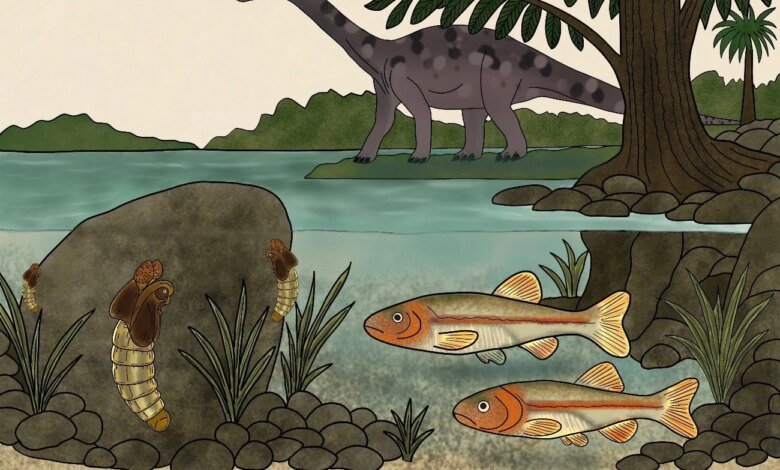
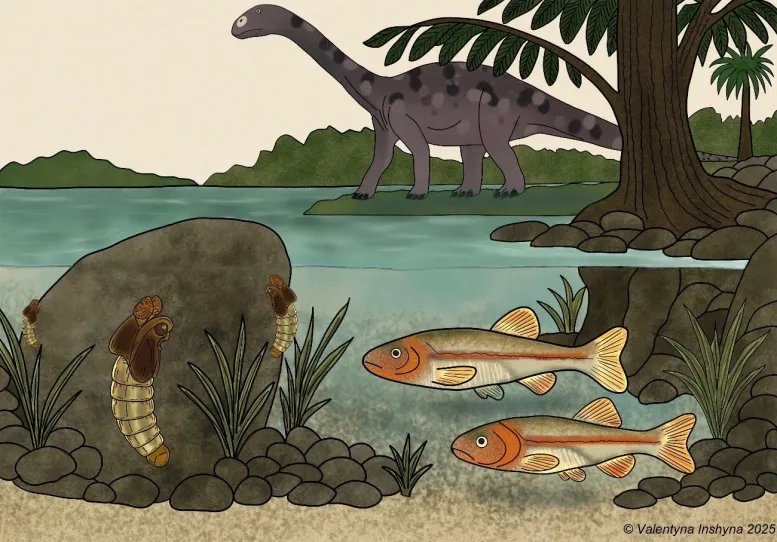
Scientists have discovered a 151-million-year-old fossil fly in Australia that challenges ideas about insect evolution.
NamedTelmatomyia talbragaricait shows a rock-gripping feature once thought unique to marinespecies. The finding supports the theory that these freshwater midges originated in Gondwana rather than the Northern Hemisphere.
Oldest Southern Hemisphere Chironomid Fossil Identified
An international research group led by the Doñana Biological Station (EBD-CSIC) has identified a new species of fossilized insect from the AustralianJurassicperiod, estimated to be about 151 million years old. This specimen represents the earliest known member of the Chironomidae family found in the Southern Hemisphere, a group of non-biting midges that live in freshwater.
the و a و to – تفاصيل مهمة
The fossil features an unusual evolutionary structure that likely allowed the insect to attach itself securely to nearby rocks. This type of anchoring mechanism had previously been associated only with marine organisms.
The fossil was uncovered in the Talbragar fish beds in New South Wales. The study, published in the journalGondwana Researchinvolved researchers from the Australian Museum Research Institute, the University of New South Wales, the University of Munich, and Massey University in New Zealand.
A Species Linked to Ancient Gondwana Waters
“This fossil, which is the oldest registered find in the Southern Hemisphere, indicates that this group of freshwater animals might have originated on the southern supercontinent of Gondwana,” explains Viktor Baranov, a researcher at the Doñana Biological Station and first author of the study.
The species has been formally namedTelmatomyia talbragaricameaning “fly from the stagnant waters,” reflecting the calm, lake-like environment once present at the Talbragar site.
the و in و of – تفاصيل مهمة
Researchers examined six fossilized specimens that included both pupae and adults emerging from their cases. Each had a terminal disc, a structure known to operate in habitats influenced by tides.
This feature was once believed to occur only in marine species. However, geological and fossil evidence from the Talbragar Fish Beds points instead to a freshwater setting, revealing the surprising flexibility (phenotypic plasticity) of chironomids.
Reevaluating the Origins of Podonominae
The Podonominae group has long served as a key reference for biogeographical research because it helps scientists understand how biodiversity forms and spreads over time.
Earlier ideas suggested that Podonominae evolved in the northern portion of Gondwana before expanding into Laurasia, the ancient northern supercontinent. The fossil record for this group is limited, partly because delicate insects rarely preserve well and partly because few studies have focused on Southern Hemisphere deposits. When older Jurassic-age fossils were later found in Eurasia, some scientists proposed a Laurasian origin.
the و in و and – تفاصيل مهمة
The new findings provide significant evidence that Podonominae likely began in the Southern Hemisphere and later spread across the world.
Vicariance and the Role of Gondwana’s Breakup
Modern Podonominae species are found primarily in the Southern Hemisphere. Their widely separated presence in South America, Australia, South Africa, and New Zealand illustrates vicariance.
This process occurs when environmental barriers such as mountains or rivers separate populations, forcing them to evolve independently and ultimately produce new species. According to a hypothesis from Swedish entomologist Lars Brundin in 1966, the breakup of Gondwana played a central role in driving this evolutionary split.
Fossil Gaps and Ongoing Challenges
Although this discovery fills an important gap in the fossil record, the broader evolutionary history of Podonominae remains difficult to trace because so few fossils have been found in the Southern Hemisphere. Most known specimens originate from the Northern Hemisphere, with only two earlier exceptions: an Eocene fossil from Australia and a Paleocene fossil from India.
the و in و and – تفاصيل مهمة
“There is a strong bias towards finding and studying fossils in the Northern Hemisphere. Because of this we end up making incorrect assumptions about where groups originated,” explains Matthew McCurry, palaeontologist from the Australian Museum and The University of New South Wales.
Professor in Massey University Steve Trewick claims, “there are long-standing questions about the way Southern Hemisphere biotas formed and changed through geological time. Fossils species of tiny, delicate freshwater insects like the Talbragar fly are rare and help us interpret the history of life on our planet.”
Next Steps: Genomics and Evolutionary Reconstruction
Combining fossil analysis with genomic data will help scientists determine whether the spread of these insects after the breakup of Gondwana happened through passive drift or active movement. The insights gained from this work will also support efforts to better understand and conserve present-day biodiversity.
Reference: “The oldest Gondwanan non-biting midge (Diptera, Chironomidae, Podonominae) sheds light on the historical biogeography of the clade” by Viktor Baranov, Matthew R. McCurry, André P.
the و of و and – تفاصيل مهمة
Amaral, Robert Beattie and Steven A. Trewick, 8 October 2025,Gondwana Research.
DOI: 10.1016/j.gr.2025.09.001
Never miss a breakthrough: Join the SciTechDaily newsletter.
Follow us on Google and Google News.
Disclaimer: This news article has been republished exactly as it appeared on its original source, without any modification.
We do not take any responsibility for its content, which remains solely the responsibility of the original publisher.
Author:Spanish National Research Council (CSIC)
Published on:2025-12-12 09:27:00
Source: scitechdaily.com
Disclaimer: This news article has been republished exactly as it appeared on its original source, without any modification.
We do not take any responsibility for its content, which remains solely the responsibility of the original publisher.
Author: uaetodaynews
Published on: 2025-12-12 06:25:00
Source: uaetodaynews.com