
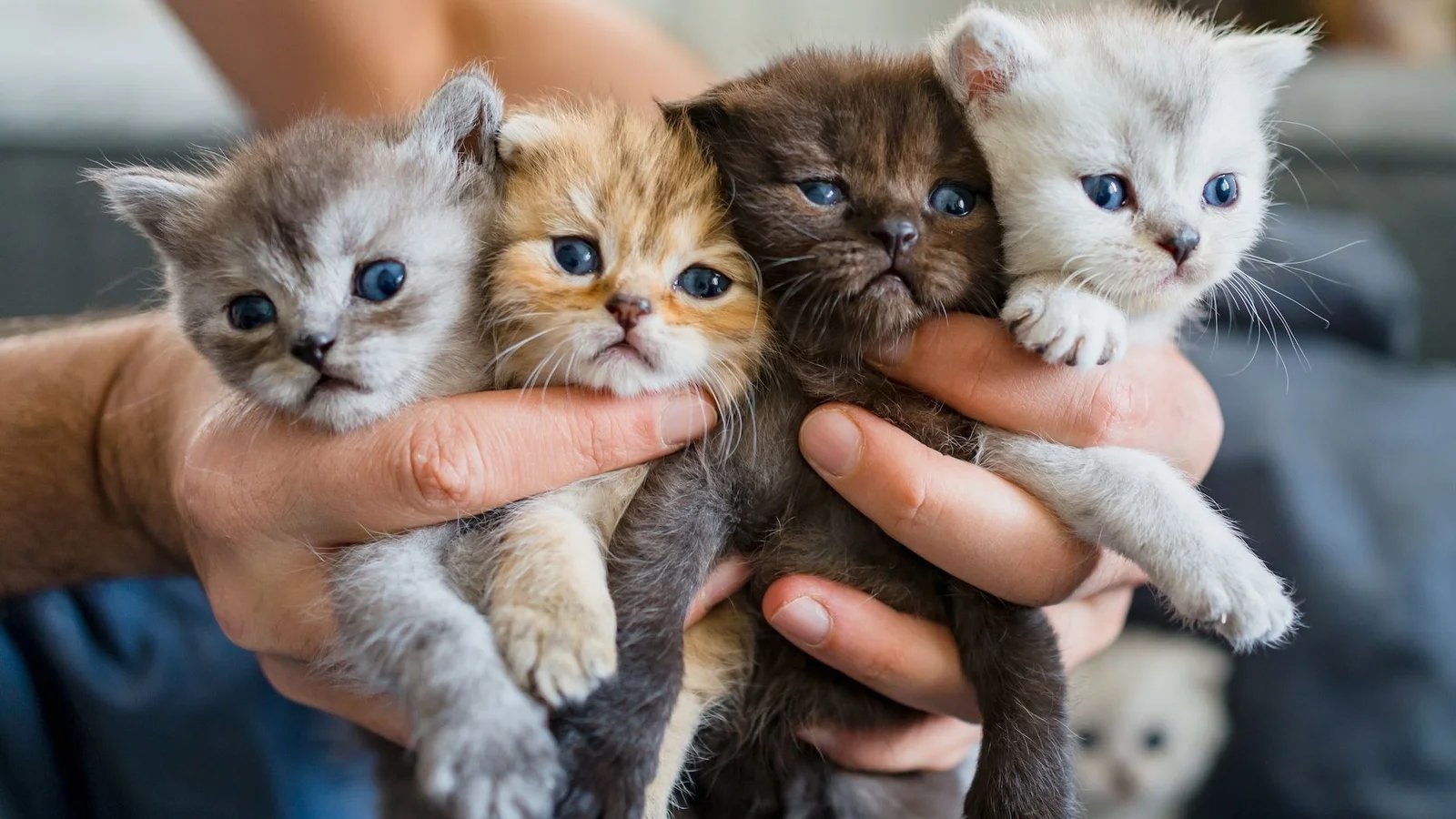
If you’ve ever seen a litter of kittens, you may know that many of them barely look related. With coats ranging from black to white, tortoiseshell to tabby, and even long-haired to short-haired, littermates can look quite different from each other.
So why do kittens often not resemble their close relations, whereas most human siblings look similar to each other? The answer comes down to the complicated nature of cat coatgeneticsand a phenomenon in cat ovulation.
The genetics of cat coat color
to و of و look – تفاصيل مهمة
The Cat Fanciers’ Association recognizes dozens of coat colors and patterns, including everything from basic solid colors to distinctive patterns, like the Bengal’s rosetted tabby coat or the Abyssinian’s ticked fur. All of those variations stem from acomplex system of interacting genes.
“There are a number of different genes involved in cat color and pattern, and it’s particularly complicated because some genes overwrite other genes,”Jonathan Lososa professor of biology at Washington University in St. Louis and author of “The Cat’s Meow: How Cats Evolved from the Savanna to Your Sofa” (Viking, 2023), told Live Science.
of و and و genes – تفاصيل مهمة
Different genes controlsolid coat colors, spotting, patterns and hair length. According to Losos, these genes come in a “hierarchy” — for example, one gene mutation for white fur, called dominant white, will override any other colors. Other genes control patterns such as tabby fur, and these work in combination with genes for color to produce a coat. Some cat coat colors are also sex-linked, meaning the gene is contained on the X chromosome, so the range of colors and patterns for male and female cats is different. In general, only female cats have calico or tortoiseshell patterns.
If all of these gene variations are hard to keep track of, that’s the point. Even a few different combinations of a handful of genes can have drastically different outcomes for coat color, pattern and length, and that’s one big reason cat littermates can look so different even when they have most of the same genes. But there’s another factor that makes the genetics of cat litters even complicated.

Multiple paternity
of و the و can – تفاصيل مهمة
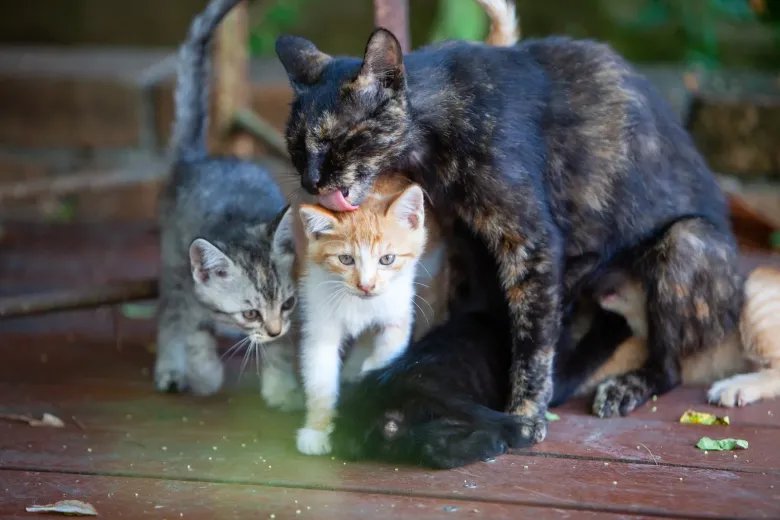
That means kittens in the same litter can have than one father, so some siblings are only 25% genetically related to each other, leaving a lot room for variation in their appearance. This phenomenon is called heteropaternal superfecundation, and it’s actually not that rare in the animal kingdom;dogs,sheepandcowscan also have multiple births with than one father. Inextremely rare casesheteropaternal superfecundation has even been documented in humans.
“I don’t think it’s unusual that cats do this,” Losos said.
Scientists don’t know exactly why heteropaternal superfecundation is so common in cats, but there are theories.
in و و the – تفاصيل مهمة
For one, induced ovulation could be a resourceful way to go about mating, and heteropaternal superfecundation is a side effect of induced ovulation. “It might be anevolutionaryadaptation that allows the mating process to be efficient,”Bruce Kornreichdirector of the Cornell Feline Health Center, told Live Science. He explained that releasing eggs only after mating prevents eggs from being “wasted” so that the female cat’s reproductive system doesn’t use energy on unneeded eggs.
Multiple paternity within a litter could even have its own advantages, Losos noted. When littermates have different fathers, it increases the genetic diversity of cat families, which is generally good for survival.
Heteropaternal superfecundation is much likely to occur in urban areas, where the concentration of cats is high and tomcat territories are likely to overlap. In fact, one1999 studyfound that 70% to 83% of urban cat litters had than one father, whereas only zero to 22% of rural litters had than one father, making diverse litters the norm rather than the exception.
p style=”font-size:18px;color:#555″>
Disclaimer: This news article has been republished exactly as it appeared on its original source, without any modification.
We do not take any responsibility for its content, which remains solely the responsibility of the original publisher.
p style=”font-size:14px;color:#555″>
Author:
Published on:2025-11-24 14:00:00
Source: www.livescience.com
Disclaimer: This news article has been republished exactly as it appeared on its original source, without any modification.
We do not take any responsibility for its content, which remains solely the responsibility of the original publisher.
Author: uaetodaynews
Published on: 2025-11-29 13:57:00
Source: uaetodaynews.com